
Iconomy Executive Participates in MOE Dialogue on School-Home Partnership
· iconomy
18 January 2025
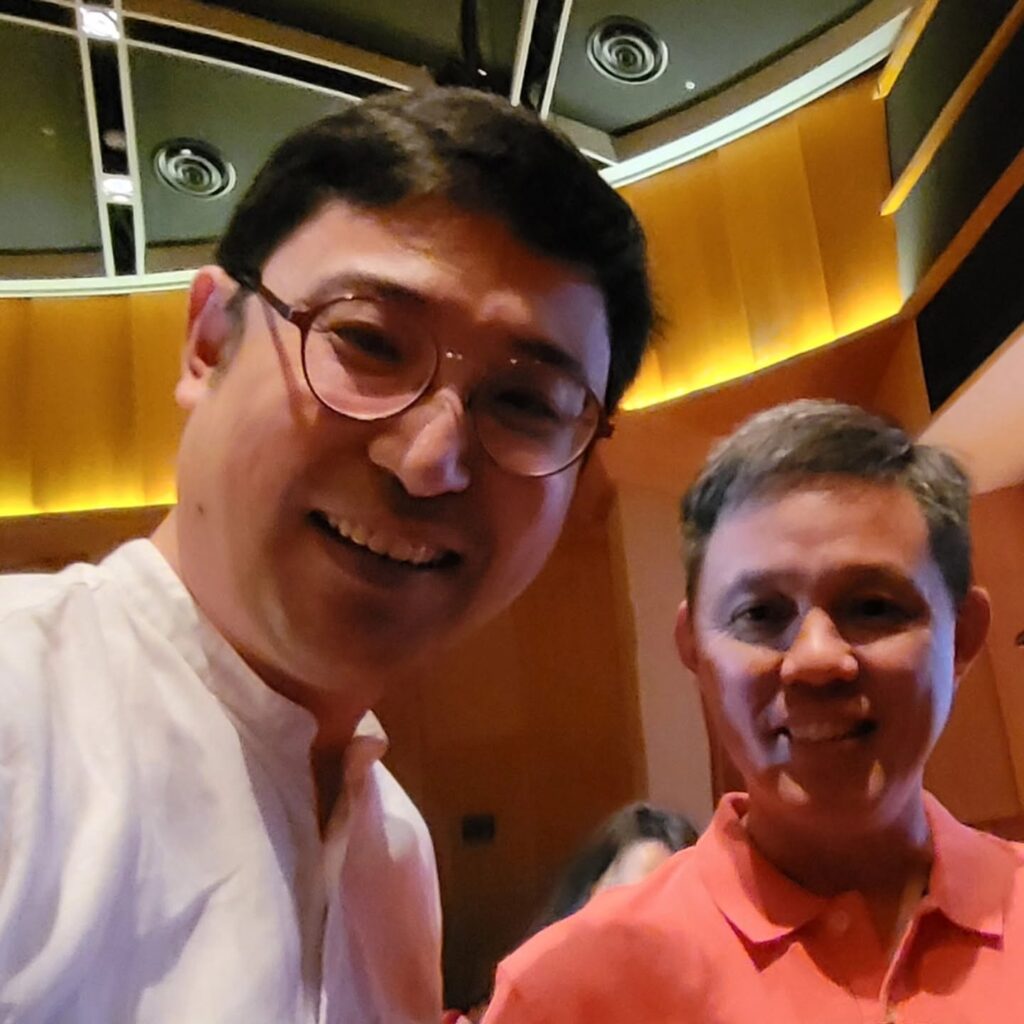
Iconomy Senior Executive Director Mr Boo Kok Chuon participated in a Ministry of Education dialogue with Parent Support Group (PSG) leaders on 18 January 2025, in his capacity as a PSG Executive Committee representative of his daughter’s Primary School.
The dialogue brought together perspectives from parents, educators and industry professionals on how schools, families and the wider community could work together to support children and prepare them for the future. The panel included Minister for Education Mr Chan Chun Sing and Minister of State for Education Ms Gan Siow Huang.
During the dialogue, Mr Boo raised the issue of support for victims of bullying in schools, drawing upon his professional experience as a mediation advocate and interest in non-adversarial dispute resolution.
Supporting Students Affected by Bullying
The discussion considered both the prevalence and perception of bullying, the role of schools in responding to reported incidents, and the challenges faced by educators when disputes involving students and their families become increasingly complex.
Mr Chan emphasised the importance of allowing schools to investigate incidents through established processes rather than forming conclusions solely from accounts circulating publicly or on social media. MOE had previously reported that the incidence of bullying reported to schools remained low and stable, at approximately two incidents per 1,000 primary school students and five incidents per 1,000 secondary school students over the preceding five years.
The dialogue also recognised the practical demands placed upon school leaders and educators when managing conflicts involving students and parents. Mediation could not necessarily provide a universal solution, particularly where educators whose primary professional responsibility is education would additionally be expected to undertake specialised dispute-resolution functions.
Minister of State Gan also acknowledged the importance of supporting the recovery of students affected by bullying.
Exploring Mediation as an Additional Avenue
Following the discussion, Mr Boo wrote to Ms Gan to further develop the mediation proposal he had raised during the dialogue.
Rather than proposing that mediation replace existing school disciplinary or safeguarding processes, Mr Boo suggested that it could operate as an optional additional avenue for appropriate cases, particularly where families felt that communication had broken down or where a dispute remained unresolved despite the school’s intervention.
The proposal identified several potential benefits of mediation.
A confidential and structured environment could allow affected students, their families and other stakeholders to communicate their perspectives more constructively. Early intervention could potentially prevent suitable disputes from escalating unnecessarily into legal proceedings, police reports or public disputes conducted through social media.
Mediation could also place greater emphasis upon the needs of affected students. Resolution might involve more than determining responsibility or imposing consequences. Depending upon the circumstances, acknowledgement, explanation, apology and an opportunity to be heard could contribute towards closure and recovery.
A Possible Role for Parent Volunteers
Recognising the concern that additional dispute-resolution responsibilities should not simply be imposed upon educators, Mr Boo proposed exploring an MOE-supported, PSG-led dispute-resolution support framework.
Under the proposal, parent volunteers who were professionally trained in mediation, or prepared to undertake suitable training, could potentially assist in appropriate cases where all relevant parties were willing to participate.
Such a framework could explore several functions, including facilitating communication between parents and schools, supporting voluntary mediation, equipping PSG members with basic conflict-resolution and communication skills, and providing an additional neutral platform where perceptions of institutional bias had become an obstacle to constructive dialogue.
Where appropriate, mediation could also be structured on a tripartite basis, recognising the school itself as an important stakeholder alongside the families involved.
Mr Boo offered to contribute voluntarily towards developing such an initiative should the Ministry consider the proposal useful.
Strengthening School-Home Partnerships
The proposal reflected a broader theme underlying the dialogue: supporting children requires cooperation among schools, parents and the wider community.
Bullying disputes can involve overlapping questions of student welfare, discipline, communication, family concerns and institutional responsibility. No single dispute-resolution mechanism is appropriate for every case, and circumstances involving safety, serious misconduct or possible criminal offences may require formal intervention rather than mediation.
For suitable cases, however, structured dialogue may provide an additional means of rebuilding communication and helping the parties move towards resolution.
Iconomy was grateful for the opportunity for Mr Boo to participate in the dialogue and to contribute his professional perspective on mediation and non-adversarial dispute resolution to a wider discussion concerning the welfare of students and school-home partnerships.
Leave a Reply