
Iconomy Contributes to National Vesak Day Dialogue on Bullying and Reconciliation
· iconomy
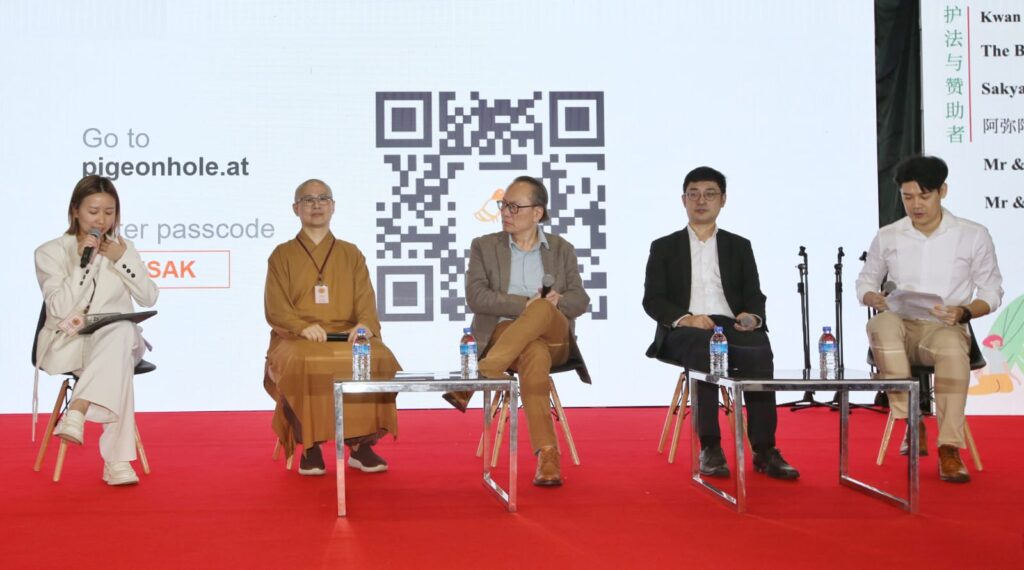
Iconomy participated in the National Vesak Day Carnival organised by the Singapore Buddhist Federation on 4 May 2025, contributing to a public dialogue on bullying, reconciliation and the role of mediation in helping victims find meaningful closure.
Mr Boo Kok Chuon, Senior Executive Director of Iconomy’s Legal and Governance Management Division, participated as a keynote speaker and panellist in his capacity as a mediation advocate and alternative dispute resolution practitioner.
Conducted entirely in Chinese, Mr Boo’s contribution explored how disputes involving bullying may be approached not only through legal rights and formal remedies, but also through communication, reconciliation and a better understanding of what victims may actually require in order to move forward.
Beyond Legal Rights and Compensation
Bullying presents difficult questions of accountability, protection and remedy. Where serious misconduct has occurred, legal or disciplinary intervention may be necessary to protect victims and establish appropriate boundaries.
At the same time, the discussion considered the limitations of approaching every conflict exclusively through an adversarial framework.
A legal dispute naturally requires parties to define their respective positions and assert their rights. In some circumstances, however, the resulting legal posture can harden those positions and increase tensions between parties whose relationship has already deteriorated.
Mr Boo discussed how constructive mediation can provide a different environment for resolving such disputes.
Rather than beginning and ending with the question of liability or compensation, mediation can assist parties in identifying the interests underlying their stated positions, addressing gaps in information and exploring what each party actually requires for the dispute to be brought to an end.
For some victims, closure may not principally be about financial compensation.
An acknowledgment that harm was caused, a sincere apology, an assurance that the conduct will not recur, or simply an opportunity to be heard may sometimes carry considerable significance to the person affected.
The appropriate outcome will necessarily depend upon the circumstances of each case. Reconciliation is therefore not a substitute for accountability. Rather, it represents another dimension of dispute resolution that may be considered alongside formal legal, disciplinary and protective measures.
Reducing Information Asymmetry Through Mediation
The discussion also considered the role of information asymmetry in the escalation of disputes.
Conflicts frequently develop in circumstances where each party possesses only part of the relevant information. The parties may disagree not only about what happened, but also about why particular decisions were made, what the other party intended, and what outcome the other party is actually seeking.
As correspondence becomes increasingly adversarial, assumptions may harden into positions before those informational gaps have been adequately addressed.
Constructive mediation can provide a structured environment in which relevant information and underlying concerns are surfaced. By improving the parties’ understanding of each other’s positions, areas of disagreement can be more accurately identified and potential avenues for resolution explored.
This does not require legal rights to be abandoned or misconduct to be overlooked. Instead, legal rights form part of a wider resolution process directed ultimately towards addressing the dispute and its consequences.
A Multidisciplinary Approach to Conflict
The dialogue also reflected the multidisciplinary nature of bullying and interpersonal conflict.
Law can define rights, responsibilities and consequences. Institutional processes can provide safeguards and disciplinary responses. Psychological support may assist victims in dealing with the emotional consequences of harmful conduct. Mediation can provide a framework for communication, acknowledgment and, where appropriate, reconciliation.
Effective dispute resolution may therefore require consideration of several of these dimensions rather than reliance upon a single mechanism.
This approach reflects a broader philosophy underlying Iconomy’s Legal and Governance Management practice: that disputes are ultimately problems to be understood, managed and resolved, rather than conflicts to be escalated unnecessarily.
Engaging the Chinese-Speaking Community
The session was conducted entirely in Chinese, enabling questions surrounding bullying, conflict and reconciliation to be discussed directly with the Chinese-speaking audience attending the National Vesak Day Carnival.
The engagement formed part of Iconomy’s continuing programme of public outreach and professional engagement, through which members of the Group contribute their professional experience to discussions extending beyond conventional commercial advisory work.
It also continued Iconomy’s practice of adapting professional and technical discussions to the communities being engaged. Whether addressing corporate and financial matters, legal and governance issues, or wider questions affecting individuals and society, effective professional communication requires more than technical knowledge alone. It requires that ideas be made accessible within the linguistic, cultural and practical context of the audience.
Contributing Professional Experience to the Community
Participation in the National Vesak Day Carnival provided an opportunity for professional experience in mediation and alternative dispute resolution to contribute to a wider community conversation about bullying and its consequences.
For Iconomy, such engagements form part of a broader commitment to the exchange of knowledge beyond the confines of individual professional engagements.
Through public dialogues, professional forums, educational programmes and community engagements, the Group and its professionals seek to contribute their experience to issues where professional knowledge can assist individuals, businesses and the wider community in understanding complex problems and considering constructive solutions.
The 22 June dialogue provided one such opportunity: to consider how conflict can be addressed firmly where necessary, constructively where possible, and with sufficient attention to the human need for acknowledgment, understanding and closure.
Media Coverage
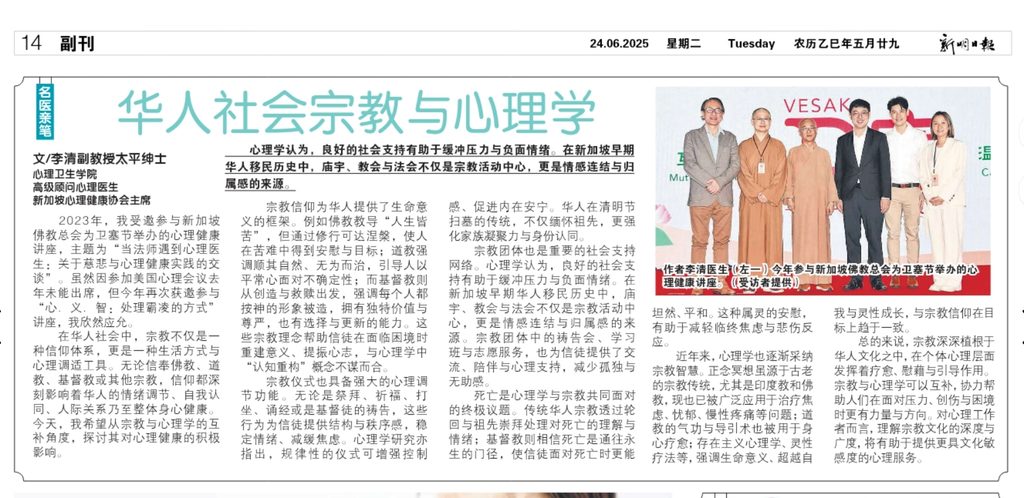
The National Vesak Day programme and its discussions on religion, society and psychological wellbeing subsequently received Chinese-language media coverage, including coverage published on 24 June 2025.
Leave a Reply