
Iconomy Group CEO Attends 36th Singapore Law Review Annual Lecture on Family Law and Justice
· iconomy
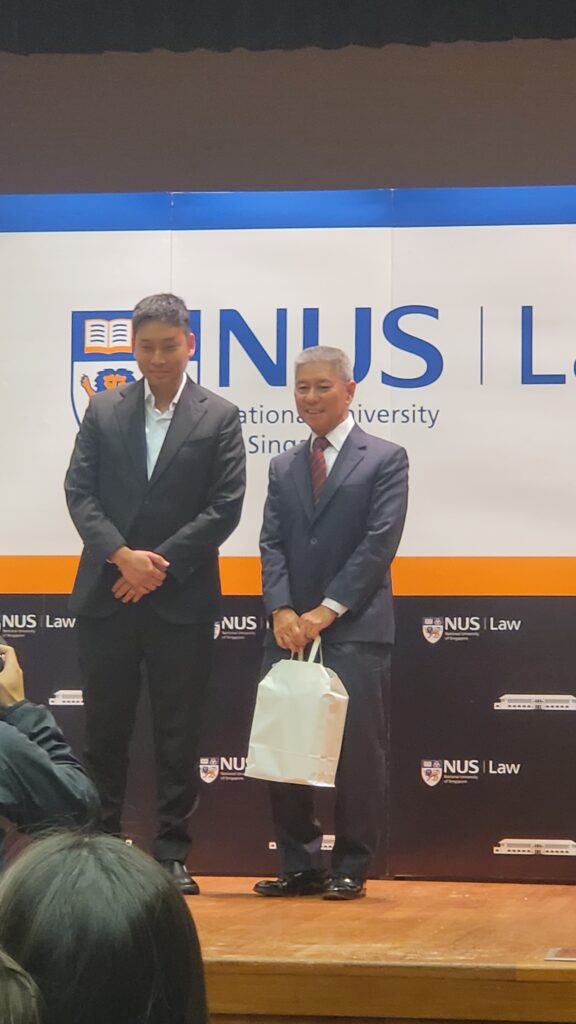
Singapore, 20 January 2025 – Iconomy Group Chief Executive Officer Mr Boo Kok Chuon attended the 36th Singapore Law Review Annual Lecture at the National University of Singapore Faculty of Law, joining members of Singapore’s legal community for an evening examining the human and institutional dimensions of family justice.
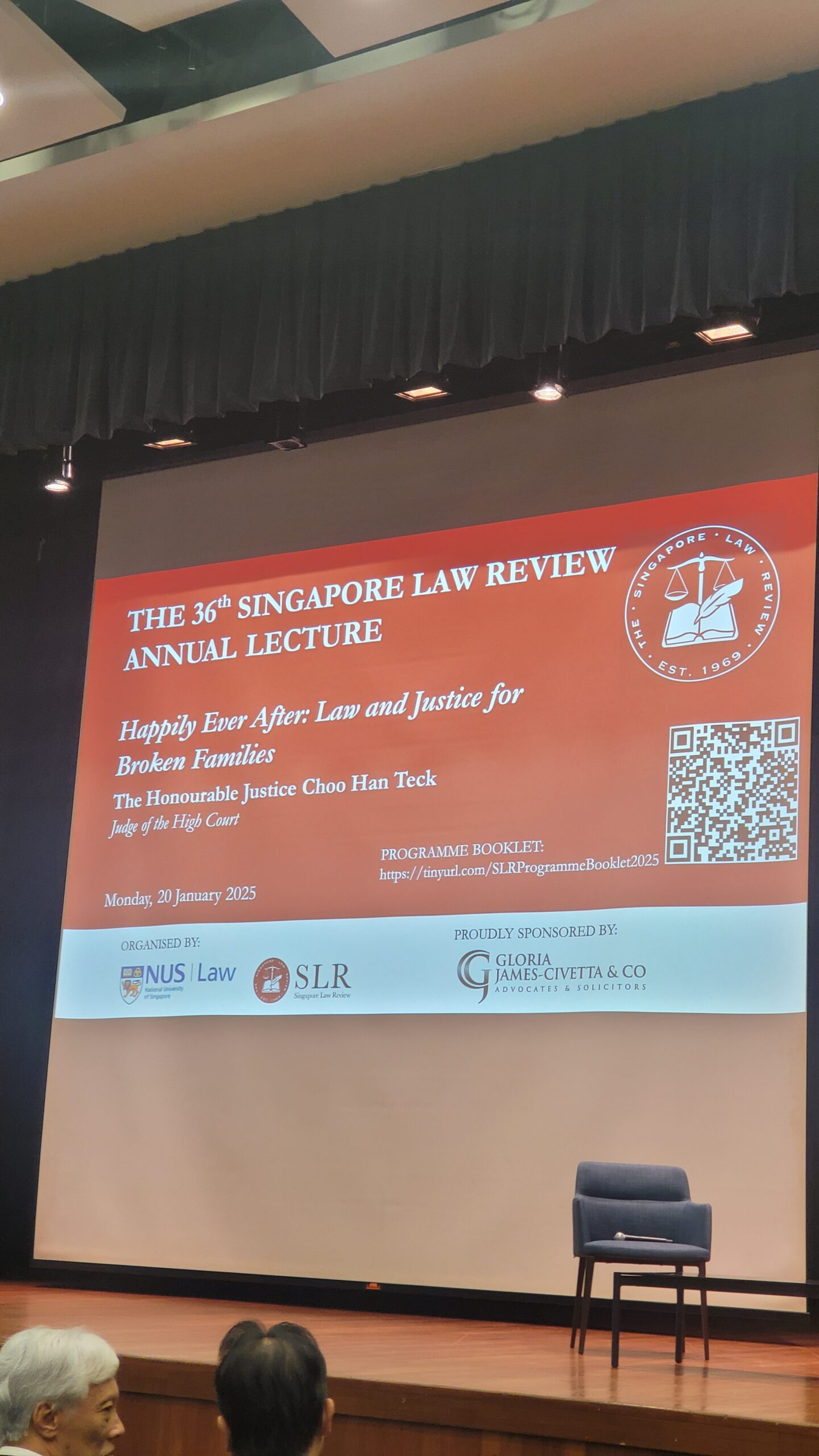
The lecture, titled “Happily Ever After: Law and Justice for Broken Families”, was delivered by the Honourable Justice Choo Han Teck, Judge of the High Court of Singapore.
The Singapore Law Review Annual Lecture is the Review’s flagship event and is intended to promote legal thinking, writing and discussion within Singapore’s legal fraternity. The 2025 lecture attracted strong interest, with more than 390 registrations received before registration closed and the auditorium reaching full capacity on the evening.
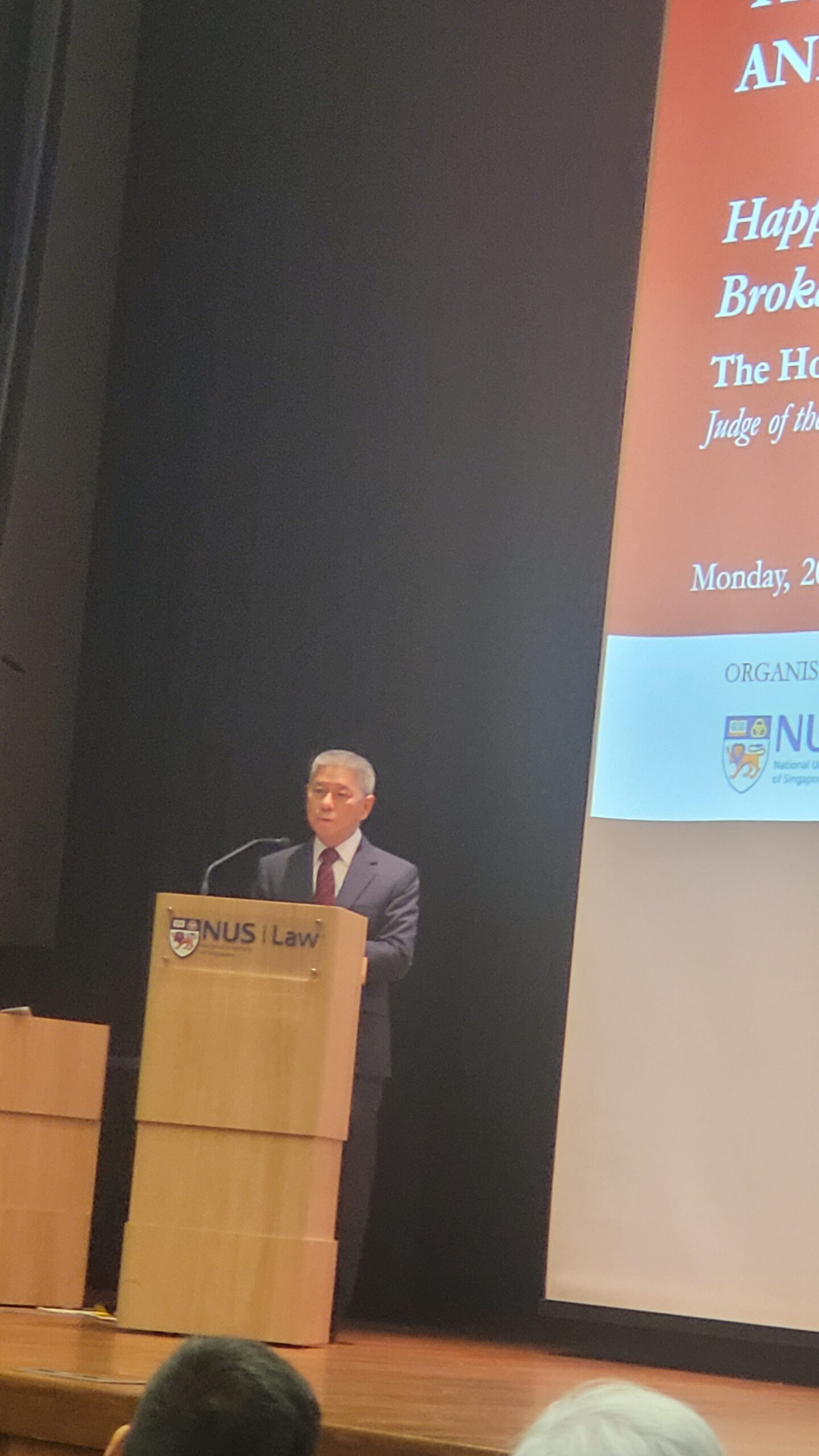
Rather than approaching family law principally through statutes and doctrine, Justice Choo adopted a considerably wider lens. His lecture examined the institution of marriage itself, the changing social and economic circumstances surrounding it, and the difficult questions that arise when intimate relationships eventually enter the legal system.
Among the themes explored were the historical development of marriage, changing expectations of love and companionship, the evolution of the position of women within marriage, the emergence of no-fault divorce, and the pressures faced by modern families in reconciling work, parenthood and personal relationships.
The lecture also considered how family law engages a wider professional community extending beyond lawyers and judges. Social workers, counsellors, doctors and other professionals may each encounter different dimensions of family breakdown, making family justice an area in which legal analysis cannot operate entirely in isolation from social and human considerations.
One particularly significant part of the lecture concerned the manner in which professionals make judgments.
Drawing upon behavioural decision-making concepts associated with Daniel Kahneman, Justice Choo discussed the distinction between intuitive and analytical thinking and the potential for noise and bias to introduce inconsistency into decision-making. In family disputes, where factual circumstances can be highly individual and emotionally charged, the challenge is not simply to exercise judgment, but to recognise the influences that may affect that judgment.
This led to one of the central themes of the evening: the relationship between empathy and objectivity.
Family justice frequently requires professionals to understand the lived experiences, anxieties and competing perspectives of individuals whose relationships have broken down. Yet empathy alone cannot determine an appropriate legal outcome. Lawyers, judges and other professionals must simultaneously maintain sufficient analytical distance to evaluate those competing perspectives fairly.
Justice Choo’s reflections therefore went beyond the conventional question of what the law provides. They raised a more fundamental institutional question of how those entrusted with applying the law should reason when legal problems are inseparable from intensely personal human circumstances.
For Mr Boo, who was pursuing his Juris Doctor studies while working across legal operations, governance and corporate advisory, the lecture offered a useful perspective on an area of legal practice markedly different from commercial and corporate disputes.
Commercial disputes may often be organised around contractual obligations, financial consequences and identifiable commercial interests. Family disputes, by contrast, can involve relationships that continue long after proceedings conclude, particularly where children and continuing parental responsibilities are involved.
The evening concluded with a question-and-answer session in which Justice Choo also reflected on his own path into the legal profession, contributing to what was both an intellectually substantive and unusually personal discussion between members of the judiciary, practitioners and students.
Mr Boo’s attendance formed part of his continuing engagement with Singapore’s legal and institutional community alongside his formal legal studies and professional work.
For Iconomy Group, such engagement reflects a broader interest in how legal institutions operate beyond written rules alone. Whether in family justice, corporate governance or commercial disputes, institutions ultimately depend upon the quality of judgment exercised by the people entrusted to administer them.
The 36th Singapore Law Review Annual Lecture provided a particularly vivid illustration of that principle: that sound legal decision-making requires not only knowledge of the law, but an ability to understand human circumstances while retaining the analytical discipline necessary to judge them fairly.
Further reading:
NUS Law Club Justified: SLR Annual Lecture 2025 – Happily Ever After?
Leave a Reply